What do I need on the Qonto side?
An API key generated in Qonto under Settings → Integrations and partnerships → API key, plus your organisation login (it looks like “my-company-1234”). Keys are encrypted at rest (AES-256) and never displayed again.
My bank is not Qonto. Does it work?
Through open banking: pick your bank in the list returned by GoCardless Bank Account Data, give consent on the bank’s website and come back to Dolibarr. You create your own account with that provider and enter its secrets in the module setup. Check your bank’s coverage before buying.
Will I get duplicate bank lines?
No. Each transaction is fingerprinted; replaying a fetch, re-reading the overlap window or running two synchronisations back to back never writes the same line twice. Matching an invoice links the native payment to the existing bank line instead of creating a second one.
What is the difference with DoliBank Match?
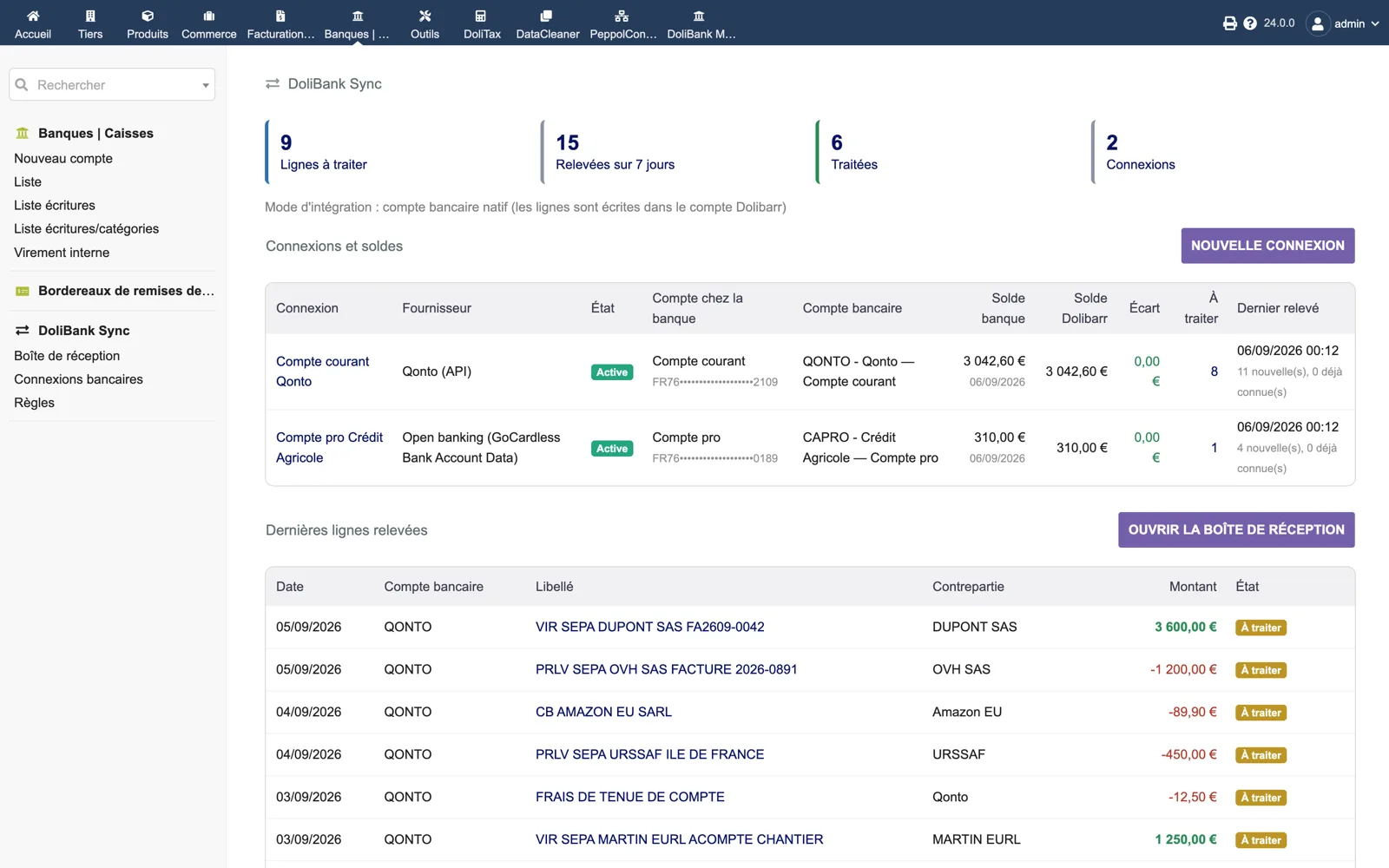
Qonto Sync fetches transactions and offers one-click actions on each line. DoliBank Match imports statement files and scores candidates with explained evidence. When both are installed, Qonto Sync can feed its lines straight into the DoliBank Match engine; the mode is detected automatically and can be forced.
Can the module move money?
No. It only reads accounts, balances, transactions and, with Qonto, attachments. Every accounting action goes through a token-protected form and a dedicated permission.
What does the batch reconciliation do?
Select up to 50 pending lines in native mode. The module keeps the ones with an exact amount and a third-party or reference clue, excludes ambiguous or duplicated proposals, and creates the payments only for the lines you tick and confirm. Results and errors are reported line by line.